My Cart

Winter Pruning Tips
Introduction
Winter is an ideal—and often overlooked—season for pruning trees, shrubs, and vines. With plants dormant, it’s easier to see structure, identify problems, and make thoughtful cuts that support healthy spring growth. Winter pruning is also one of the safest times to improve plant health, manage size, and encourage better flowering or fruiting once spring arrives.
Why Winter Pruning Matters
Pruning improves plant health, encourages better shape and size, and increases flower or fruit production. Winter pruning stimulates strong new growth in spring and allows gardeners to remove dead, diseased, or damaged branches—something that should be done whenever it’s noticed. Following the three “golden rules” makes pruning simpler: remove dead, diseased, and damaged wood; prune out crossing or rubbing branches along with fast-growing shoots like suckers and water sprouts; and finally, prune for shape.
Thinning vs. Heading Cuts
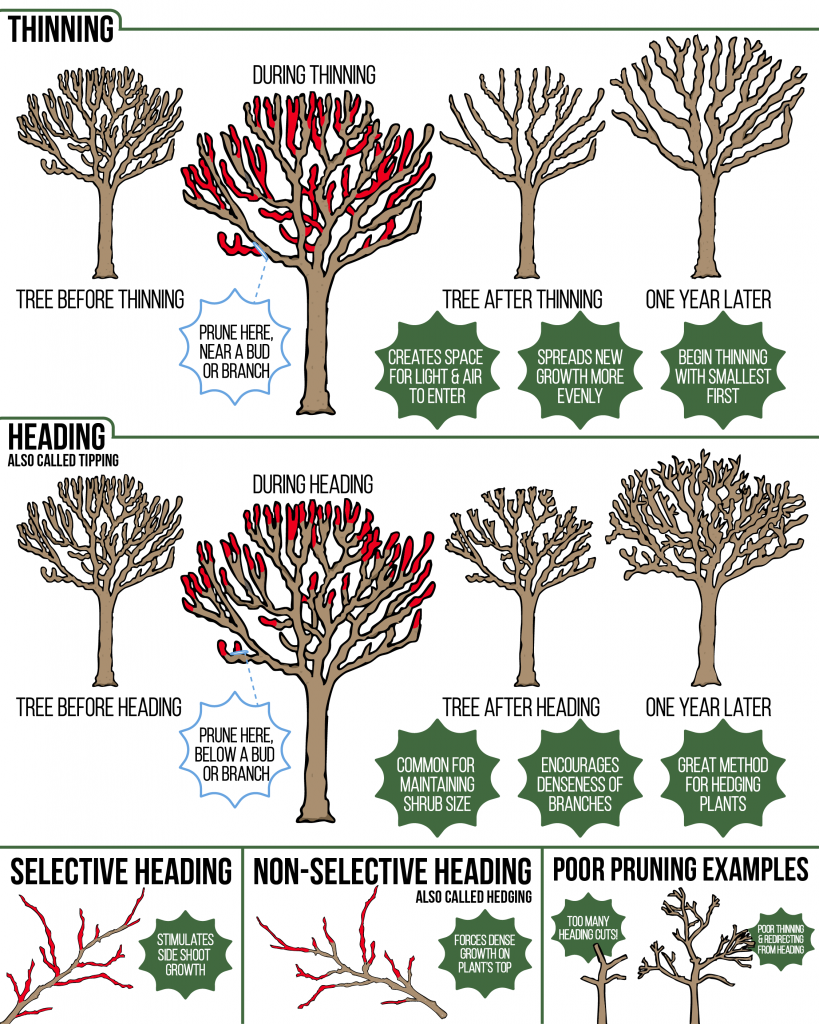
Understanding the difference between pruning cuts helps prevent mistakes. Thinning cuts remove an entire branch back to its point of origin or a larger side branch. These cuts open plants to light and air, reduce size without encouraging excessive regrowth, and direct new growth more evenly throughout the plant. Thinning is preferred for trees and large shrubs, and helps avoid an over-pruned appearance.
Heading cuts shorten branches to control size and encourage bushier growth. Selective heading cuts are made back to a bud or side branch and should not leave stubs, as stubs cannot heal properly and may invite disease. Non-selective heading, commonly used for hedging, involves cutting stems back anywhere along their length. With this method, small stubs are normal and acceptable, as the goal is dense growth rather than precise structure.
Plant Types and Winter Pruning
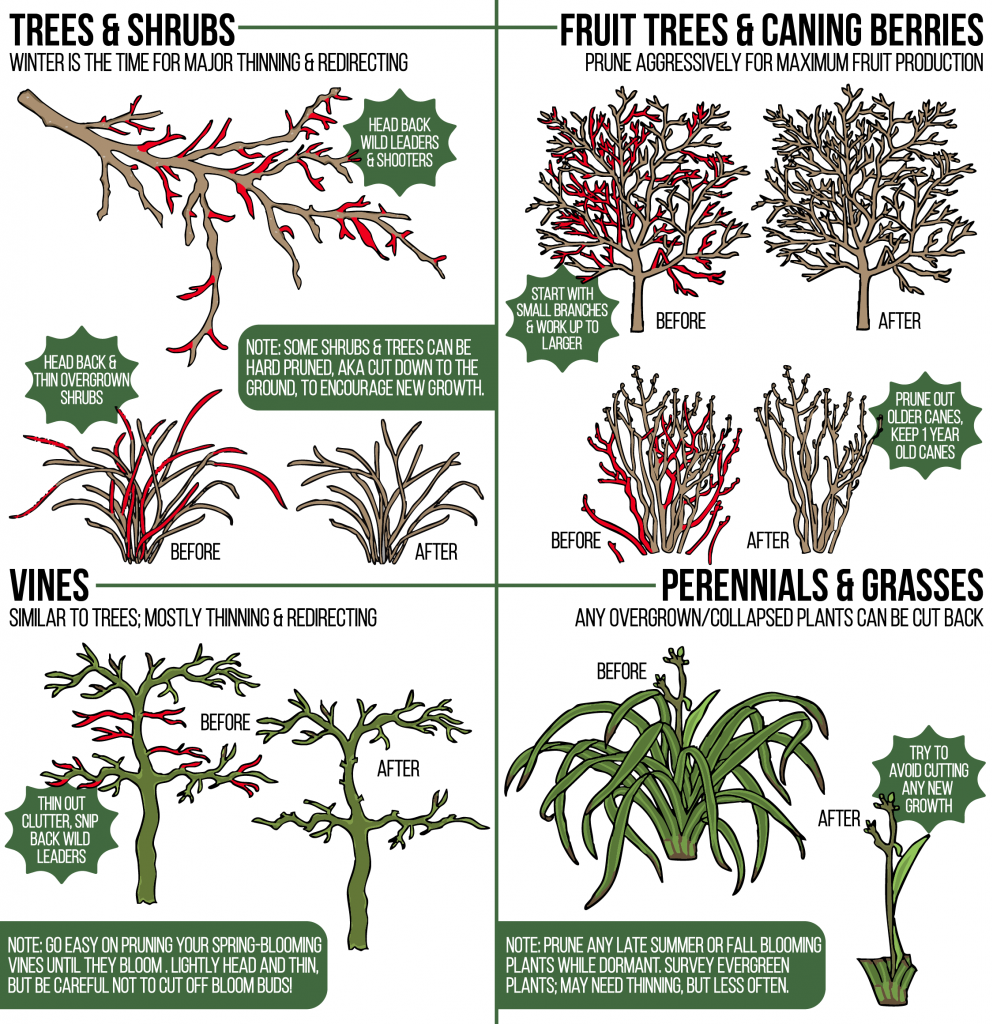
Trees and Shrubs: Winter is the best time for thinning, removing crossing branches, and redirecting growth. Some shrubs, like red twig dogwood, smoke bush, and shrub willow, can be cut back hard to encourage fresh, colorful growth. Trees generally prefer thinning rather than heavy heading.
Vines: Thin out crowded growth and trim back wild or wandering leaders in winter. For spring-blooming vines, wait to do major pruning until after flowering to avoid removing buds.
Perennials and Grasses: Ornamental grasses and upright perennials that have collapsed or become overgrown can be cut back in winter, provided new green growth has not yet started. Evergreen grasses often need only light thinning and cleanup rather than full cutbacks.
Timing Considerations
Most plants can be pruned in winter, except late winter and spring bloomers like lilac, forsythia, azalea, and bigleaf hydrangea, which bloom on old wood and should be pruned after flowering. Otherwise, summer and fall bloomers—such as crape myrtle, butterfly bush, and spirea—bloom on new wood and benefit most from winter pruning.
Conclusion
In conclusion, general thinning is safe throughout the year, and it’s highly unlikely you’ll kill a plant by pruning at the wrong time or with an imperfect cut. In fact, winter pruning doesn’t need to be exact—just intentional. A little thoughtful pruning now can lead to healthier plants and a better-looking garden when spring arrives.
If you have any questions that weren’t answered or need more information, feel free to stop by and see us at either the Broad St. or Mechanicsville location. You can also give us a call or drop us an email at info@stranges.com. We’re here to help you grow better!
Connect with Strange’s:
Instagram: @StrangesRVA Facebook: @Strange’s Florist
Mechanicsville: 804-321-2200 West Broad: 804-360-2800